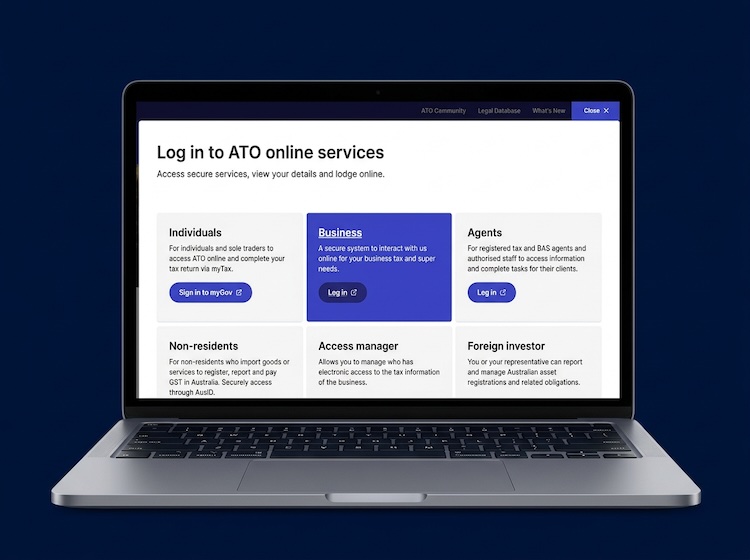
Office admin tax deductions cover expenses you incur in your role when your employer does not reimburse you. You can claim the work‑related portion of each expense. Common examples include office equipment, home office costs, communication bills, training, travel and professional fees. Always keep evidence such as receipts, invoices and logs. Good records will ensure you meet ATO requirements and support every claim.
Summary of Admin Tax Deductions
- Equipment and supplies: Immediate write‑off for items under $300; depreciate larger assets.
- Home office expenses: Claim 67 cents per work hour or actual extra costs.
- Mobile and internet: Apportion work use via itemised bill or four‑week log.
- Training and development: Deduct course fees, materials and travel for relevant study.
- Travel and vehicle expenses: Use cents‑per‑kilometre or logbook for off‑site travel.
- Professional memberships: Annual fees for unions and industry bodies.
- Tax agent and accounting fees: Deduct fees for preparing and lodging your return.
- Record‑keeping best practices: Keep receipts, invoices and logs for five years.
Equipment and Supplies
Office admin staff rely on tools and supplies. You can claim:
- Immediate write‑off for items costing $300 or less, such as stationery, printer ink or small gadgets.
- Depreciation for assets over $300, such as computers, desks and software licences.
- Stationery and consumables in full when purchased, if used for work.
If you use an asset partly for private purposes, apportion the cost. For example, if you use a laptop 80% for work, you claim 80% of its decline in value.
Home Office Deductions
When your employer requires you to work from home—and provides no fixed office—you can claim running costs for your dedicated workspace. You have two methods:
- Fixed‑rate method: Claim 67 cents per hour to cover energy, internet and equipment decline in value.
- Actual‑cost method: Claim the exact extra costs you incur, such as higher power bills or printer supplies.
Keep a log of hours worked at home and copies of your bills or invoices. Choose the method that gives a higher deduction.
Mobile and Internet Usage
Many office admins use personal mobile phones and home internet for work calls, emails and cloud services. You can claim:
- A proportion of your mobile and internet bills based on an itemised statement or a representative four‑week usage log.
- Depreciation for handsets and routers costing over $300 under the same asset rules as other equipment.
Record your work‑related use clearly. Apply that percentage to your total bill to calculate your deduction.
Self‑Education and Training
Tax deductions for office admin include courses and workshops that maintain or improve skills needed in your current role. You can claim:
- Tuition and enrolment fees for certificates, seminars and conferences.
- Textbooks, stationery and materials related to the course.
- Travel costs to attend training events, such as fares and parking.
Keep invoices, receipts and course outlines that demonstrate how each expense links to your current duties.
Travel and Vehicle Expenses
Your daily commute to a usual workplace is not deductible. However, you can claim:
- Travel between separate workplaces for the same employer.
- Off‑site meetings or training venues.
- Cents‑per‑kilometre method (up to 5,000 business kilometres per year) or a logbook for car expenses.
- Overnight travel expenses, including accommodation, meals and incidentals when away from home on business.
Retain receipts, tickets and a travel diary to support every claim.
Professional Memberships and Subscriptions
Staying connected helps you perform at your best. You can deduct:
- Annual fees for unions, professional associations and industry bodies relevant to office admin duties.
- Subscriptions to trade journals and magazines that keep you informed of best practices.
Save membership confirmations and payment receipts to prove the expense directly relates to your role.
Tax Agent and Accounting Fees
Fees you pay to manage your tax affairs are also deductible. You can claim:
- Fees paid to a registered tax agent for preparing and lodging your return in the same financial year.
- Tax‑return software costs and reference materials, apportioned if there is any private use.
- Travel expenses to meet your tax adviser, if applicable.
Keep all invoices and receipts to back up these claims.
Record‑Keeping Best Practices
Good records are vital for every claim. Ensure you:
- Keep receipts or invoices showing the supplier, amount, date and nature of the expense.
- Maintain logs or diaries to split work versus private use for phone, internet and home office.
- Store supporting documents such as course outlines, tickets or itineraries.
- Keep digital copies in apps like myDeductions or organised folders.
- Retain evidence for five years from the date you lodge your return.
Contact an Admin Tax Deduction Expert
Begin your return today to see your estimate in minutes. Our registered tax agents are here to guide you every step of the way. No upfront fees, just pay when you get your tax refund.